Since the 21st century, everything has gradually become "digital", and these resources are concentrated in the Internet. The application of digitalization has a significant impact on the copyright field of digital content, and the ease of replication and dissemination of digital content brings many difficulties to the management of digital copyright. Although it is possible to obtain knowledge and information from the internet more quickly and conveniently, which prompts us to pay attention to digital content, on the other hand, it also makes infringement easier. In order to effectively protect the copyright of digital publications, there must be a unique technology to protect the copyright of digital audio and video content, which is called digital copyright protection technology. The rapid changes in the form and distribution mode of digital content works pose challenges to digital copyright protection, forcing the continuous evolution of digital copyright protection technology. Content protection technology based on Digital Rights Management (DRM), which includes core technologies such as encryption, authentication, and authorization, is considered an effective method and has been widely used and rapidly developed. Digital copyright management runs through the entire lifecycle of digital content, including content production, storage, distribution, reception, playback, and display.
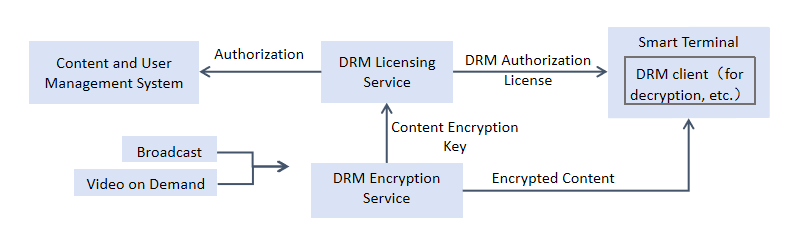
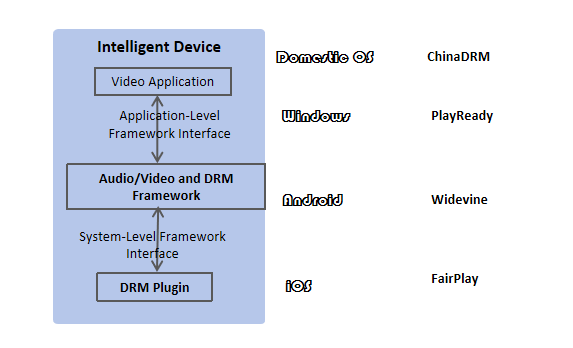
The core technology of DRM includes 1) content encryption: it can help content providers, video and audio broadcasting platforms, and operators and distributors to encrypt and protect videos before broadcasting, which is likely to reduce the possibility of infringement and prevent the illegal dissemination of digital content; 2) Authorization control: By restricting or authorizing the use of content and content encryption keys, ensuring that they are only open to users who have purchased genuine copies, providing flexible power control methods for digital content, such as usage period, whether it can be stored locally, security level requirements for playback terminals, video output protection (HDCP, ADCP, etc.), etc. Meanwhile, traceable DRM based on digital watermarking can effectively trace the path of digital content leakage and the source of piracy in situations where infringement has already occurred. The application framework of DRM technology is shown in the following figure.
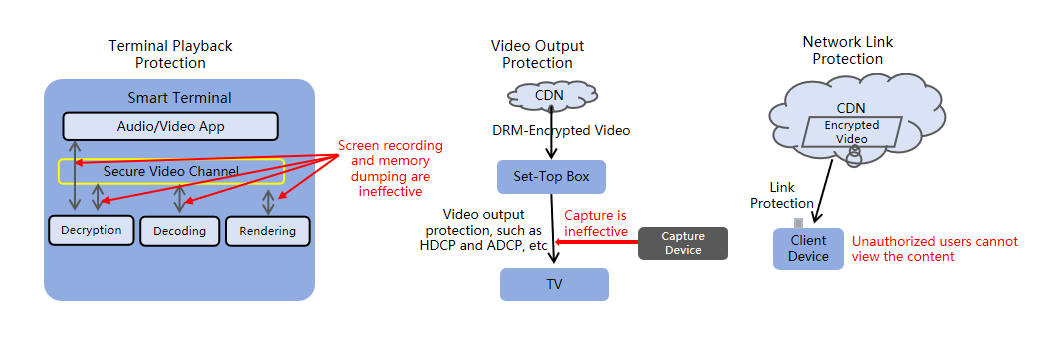
DRM technology blocks common infringement behaviors, as shown in the following figure.
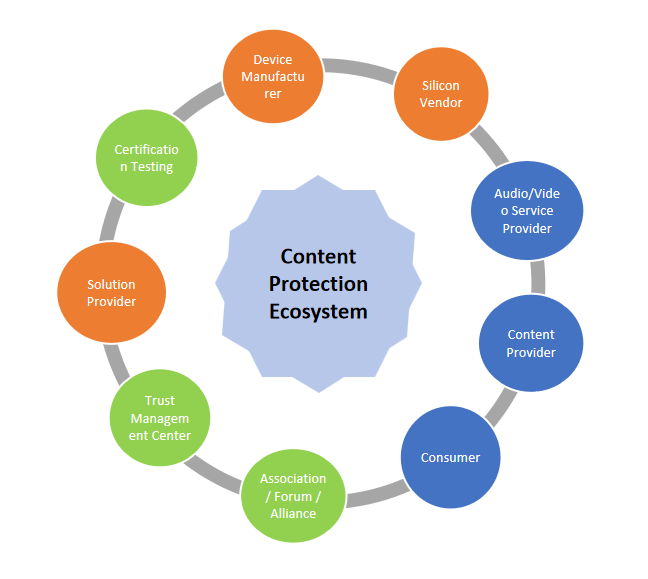
The content protection ecosystem consists of technology providers (such as chip manufacturers, terminal manufacturers, and solution providers), technology users (such as content providers, service providers, and consumers), and ecosystem service providers. Among them, the ecosystem service providers (forums/associations/alliances, trust centers, certification testing agencies, etc.) mainly provide standards, DRM trust management services, technology and product evaluations, service certification, technical consulting, market support, and other services to support the healthy and sustainable development of the ecosystem.
The mainstream terminal system ecosystems (HarmonyOS, Android, Windows, Apple) consider DRM as an important capability of the terminal, and generally deploy DRM components at the factory production of the terminal.
Since the 21st century, everything has gradually become "digital", and these resources are concentrated in the Internet. The application of digitalization has a significant impact on the copyright field of digital content, and the ease of replication and dissemination of digital content brings many difficulties to the management of digital copyright. Although it is possible to obtain knowledge and information from the internet more quickly and conveniently, which prompts us to pay attention to digital content, on the other hand, it also makes infringement easier. In order to effectively protect the copyright of digital publications, there must be a unique technology to protect the copyright of digital audio and video content, which is called digital copyright protection technology. The rapid changes in the form and distribution mode of digital content works pose challenges to digital copyright protection, forcing the continuous evolution of digital copyright protection technology. Content protection technology based on Digital Rights Management (DRM), which includes core technologies such as encryption, authentication, and authorization, is considered an effective method and has been widely used and rapidly developed. Digital copyright management runs through the entire lifecycle of digital content, including content production, storage, distribution, reception, playback, and display.
The core technology of DRM includes 1) content encryption: it can help content providers, video and audio broadcasting platforms, and operators and distributors to encrypt and protect videos before broadcasting, which is likely to reduce the possibility of infringement and prevent the illegal dissemination of digital content; 2) Authorization control: By restricting or authorizing the use of content and content encryption keys, ensuring that they are only open to users who have purchased genuine copies, providing flexible power control methods for digital content, such as usage period, whether it can be stored locally, security level requirements for playback terminals, video output protection (HDCP, ADCP, etc.), etc. Meanwhile, traceable DRM based on digital watermarking can effectively trace the path of digital content leakage and the source of piracy in situations where infringement has already occurred. The application framework of DRM technology is shown in the following figure.
DRM technology blocks common infringement behaviors, as shown in the following figure.
The content protection ecosystem consists of technology providers (such as chip manufacturers, terminal manufacturers, and solution providers), technology users (such as content providers, service providers, and consumers), and ecosystem service providers. Among them, the ecosystem service providers (forums/associations/alliances, trust centers, certification testing agencies, etc.) mainly provide standards, DRM trust management services, technology and product evaluations, service certification, technical consulting, market support, and other services to support the healthy and sustainable development of the ecosystem.
The mainstream terminal system ecosystems (HarmonyOS, Android, Windows, Apple) consider DRM as an important capability of the terminal, and generally deploy DRM components at the factory production of the terminal.